


Overstayer Modular Channel DM - Dual-Mono Channel Strip & Creative Tone Shaper
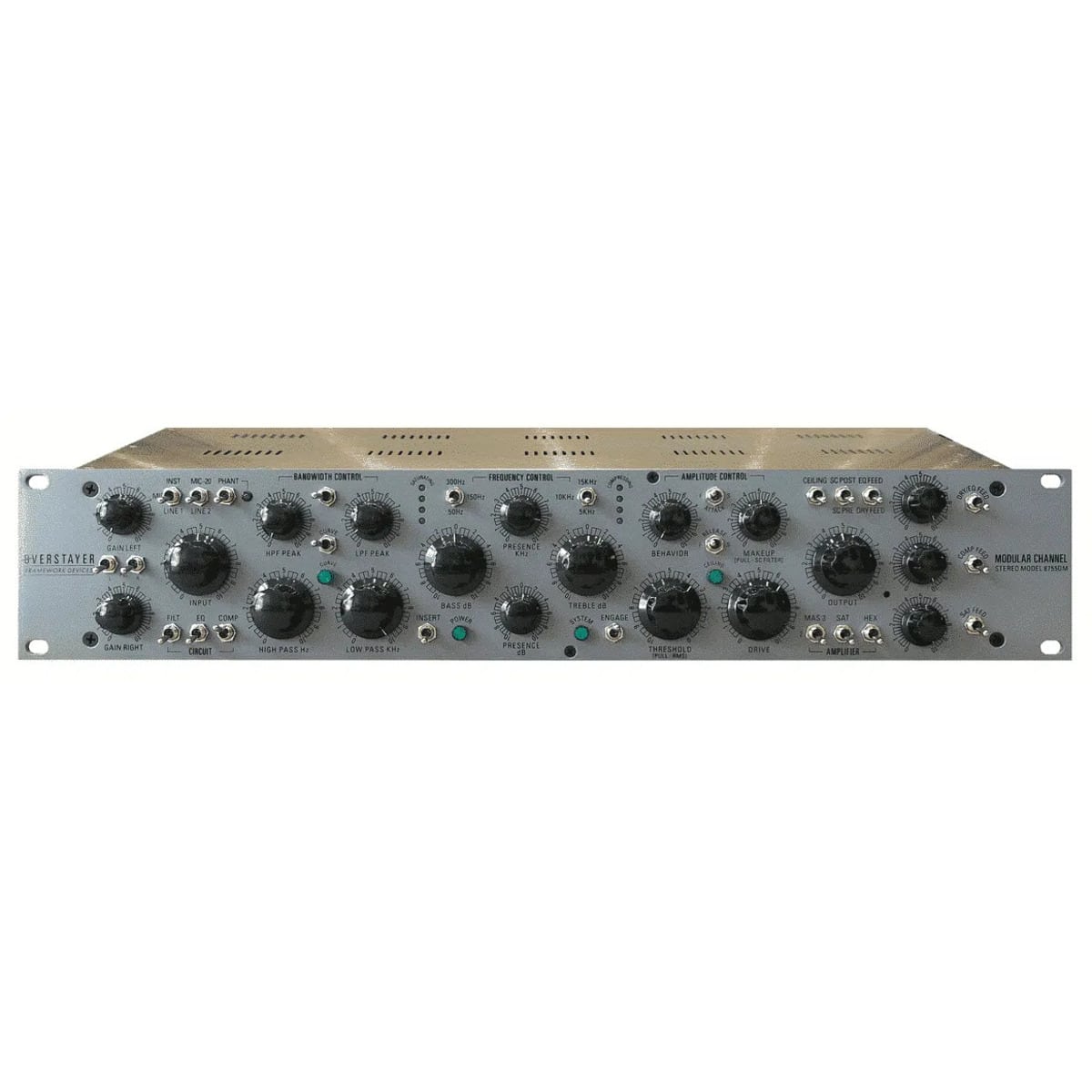
The Overstayer Modular Channel DM (Model 8755DM) is a dual-mono analogue channel strip that brings console-grade processing and bold coloration to modern hybrid studios.
Each channel offers its own cascaded sections for filters, 3-band EQ, dynamics, and harmonic drive, plus a smart routing matrix for parallel blends.
Use it as two fully independent channels or pair them for powerful bus work - the DM excels on tracking, re-amping, stems, and mix-bus tone sculpting.
Key Features
- Dual-mono architecture: two completely independent analogue channels for tracking or mix processing.
- Creative routing matrix: blend Dry/EQ, Comp, and Sat feeds in parallel for instant NYC-style compression and saturation layers.
- High-/Low-Pass filters with resonance: musical tone shaping; capable of extreme moves for sound design.
- Three-band EQ: low and high shelves with selectable frequencies plus a wide-sweep “Presence” mid band.
- Flexible dynamics: compressor with behaviour control, variable attack/release, sidechain filtering, and makeup gain.
- Multiple drive circuits: MAS / SAT / HEX style stages for everything from subtle warmth to aggressive harmonic saturation.
- Console workflow: calibrated I/O gain staging for headroom management, stereo linking optional via front-panel controls when desired.
- Instrument & line-level friendly: welcomes synths, drum machines, guitars/bass (via DI/re-amp), vocals, and mix stems.
- Recall-friendly front panel: clearly labelled switches and detented controls for fast session workflow.
- 2U rackmount build: rugged, studio-ready chassis with premium potentiometers and switches.
Typical Applications
- Tracking: sculpt kick/snare on one channel while compressing bass or vocals on the other.
- Re-amping & synths: add filters, drive, and compression to drum machines, modular, and soft-synth stems.
- Mix bus & groups: parallel comp/sat blends on drums, guitars, or keys for instant weight and excitement.
- Sound design: resonant filtering plus multi-stage drive for cinematic impacts, risers, and textures.
Technical Overview
| Unit Type | Dual-mono analogue channel strip / tone shaper (2U rack) |
|---|---|
| Signal Blocks | Input gain → HP/LP Filters (resonant) → 3-Band EQ → Compressor → Saturation/Drive → Output |
| EQ | Low & High shelves (selectable freqs), Presence mid band (wide sweep) |
| Dynamics | Variable threshold, attack, release, behaviour/ratio character, makeup gain, sidechain filtering |
| Saturation | Multiple drive circuits (e.g., MAS / SAT / HEX-style) for harmonic colouring |
| Parallel Matrix | Independent Dry/EQ, Comp, and Sat feeds with mutes/blends per channel |
| I/O | Balanced line-level I/O; instrument/line friendly (use DI/re-amp as needed) |
| Power | 100-240 V AC, internal supply |
| Construction | Steel chassis, detented pots and robust switches for reliable recall |
DM vs. DS (Stereo) - Which to Choose?
Choose the DM if you want two fully independent channels for maximum flexibility in tracking and stem processing.
If you primarily process true stereo sources with constant linking and a shared control set, consider the Modular Channel DS variant.
Sonically, both share the same core building blocks - the difference is workflow and channel independence.
Why Engineers Love It
The Overstayer Modular Channel DM behaves like a mini console plus a creative effects unit.
Its combination of parallel routing, musical filters/EQ, character compression, and multistage drive makes it a fast, inspiring way to add size, punch, and vibe - from subtle polish to boundary-pushing sound design.


