





Why is reverb important?
Reverb is the acoustic phenomenon of sound reflecting and spreading in a room after it has been produced. It occurs naturally in any physical environment, from large concert halls to small bathrooms. Reverb is important because it adds a sense of space and location to an audio recording. It can make a song sound like it was recorded in a cathedral or a small, intimate space, and this atmosphere can be crucial to the listening experience.
Using Reverb in professional recording studios
In professional recording studios, reverb is an indispensable part of sound production. Here it is used to:
Add Spaciousness:
Professional sound engineers use reverb to give instruments and vocals a spacious sound. This can create a sense of depth and dimension in the recording, making it more engaging.
Customise Genres:
Reverb is used differently depending on the genre of music. For example, a classical orchestral recording may benefit from a long-lasting, natural reverb, while a modern pop production may only use a little reverb to keep the sound dry and clean.
Highlight Sound elements:
Reverb can be used to emphasise certain sound elements in a song. This makes it possible to give vocals a special place in the mix or create a dreamy atmosphere around instruments.
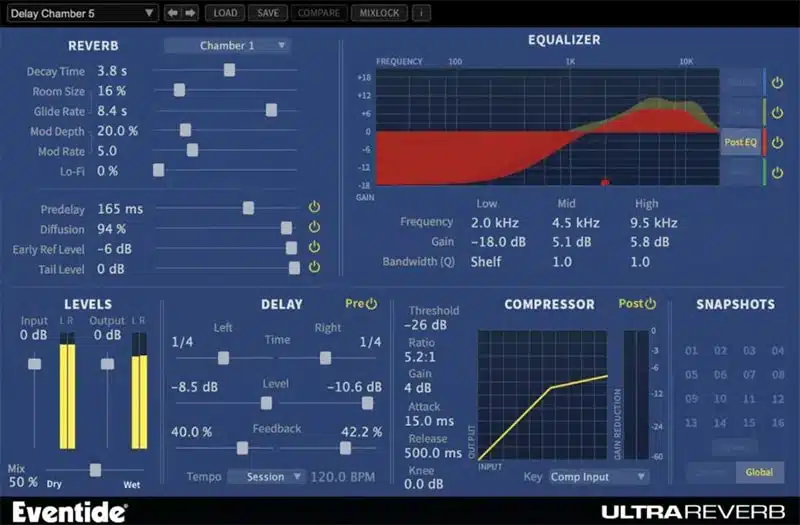
Reverb in home studios
In the home studio, you should also have access to reverb, although it may not be as advanced as in professional settings. Using reverb in home studios has some benefits and challenges:
Benefits:
Creative Freedom:
Home studios allow you to experiment and find your own unique sound signature with reverb. You can customise it to your preferences and musical goals.
Budget-friendly:
There are many affordable reverb plugins and devices available for home use, so you don't need to invest in expensive studio equipment.
Pitfalls:
Bridging:
A common mistake is to overuse reverb, which can lead to a muddy or unclear sound. It's important to practice and fine-tune the reverb settings to avoid this.
Treatment and Acoustics:
Home studios don't usually have the acoustics found in professional studios. This can affect how the reverb behaves in the room and requires careful acoustic treatment.
Reverb is a versatile effect that can transform the sound in different music genres and production contexts. In pop ballads, reverb often plays a central role by adding an ample amount of reverb to the vocals. This creates a sense of intimacy and drama in the song, which can intensify the emotional connection between the listener and the artist. Reverb in this context acts as a creative tool to convey the message of the lyrics in a deeper way.
In rock music, the use of reverb can vary significantly depending on the subgenre. Some rock styles use reverb on the drums to create a spacious and powerful sound that fills the room. On the other hand, some rock subgenres avoid reverb to achieve a dry and aggressive sound that suits their energetic expression. This is where reverb shows its versatility by adapting to different musical needs.
Finally, in electronic music, reverb is a crucial effect used to create futuristic and spatial soundscapes. Especially on synthesisers and effects, reverb is used to give the sound a sense of depth, spaciousness and movement. This helps to create a hypnotic and atmospheric sound experience that characterises many electronic music styles.
In all of these examples, reverb demonstrates its power to shape sound and influence the listening experience. However, the use of reverb requires careful consideration and tuning to achieve the desired sonic result, as it can have a decisive impact on the mood and character of the music.
About Reverb
Reverb is a magical ingredient in the world of audio production. It can add depth, character and a sense of place to recordings. Whether you're a professional audio engineer or a keen amateur, it's important to understand how to use reverb correctly to achieve the desired result. With careful practice and experimentation, you can bring your audio recordings to life and create a unique audio identity.