







Why are equalisers important?
You should use equalisers in your audio production because they allow you to adjust the tonal balance of the sound and tailor the sound. One of the main ways to use an equaliser is by correcting or optimising the frequency balance of the sound. This can be done by boosting or reducing certain frequencies in the sound to make it sound more clear, balanced or to match other elements in the mix.
Equalisers are also used to reduce noise or unwanted frequencies, such as resonance in a guitar or feedback from a PA system. You can also use an equaliser creatively by giving a vocal or guitar a specific timbre or to create a unique soundstage in a music production.
The best equalisers
The world's best equalisers differ from other equalisers in several ways. Firstly, they can have multiple adjustable bands, giving you a greater degree of control over the sound. They may also have advanced features such as high-precision adjustment, high resolution and high-quality components that allow for a more precise and detailed adjustment of the sound.
The best equalisers also often have a wider frequency response, allowing the sound engineer or musician to adjust a wider range of frequencies. They may also have more advanced filter types, such as parametric EQ or graphic EQ, which provide more options to shape the sound.
Finally, the world's best equalisers can often have a higher build quality and longer lifespan as they are made from better components and materials, making them more robust and resistant to damage.
It's important to note that the best equalisers can vary depending on your preference and application. There may be equalisers that are better for specific purposes or in specific contexts.
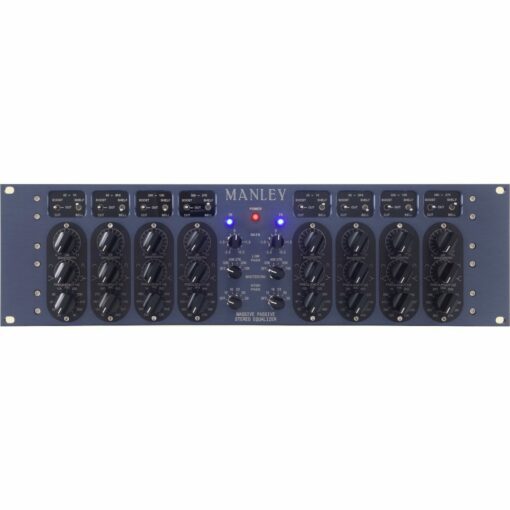
How to use equalisers
There are several ways to use equalisers, depending on the desired result and the specific audio source. Here are some general tips for using equalisers in the best possible way:
- Start by listening to the audio
Before you start adjusting the equaliser, it's important to listen to the audio and understand how it sounds in its current state. This will help you identify the frequencies that need to be changed. - Use EQ gradually
When you start adjusting the equaliser, do it gradually and in small steps. This will help you avoid big changes in the tonal balance of the sound and avoid damaging the sound. - Focus on specific frequencies
When using the equaliser, focus on specific frequencies instead of adjusting the entire spectrum at once. This will help you get the desired timbre and avoid damaging the sound.
Use a spectral analysis tool
It can be useful to use a spectral analysis tool that shows the frequency distribution of the sound when adjusting the equaliser. This will help you see which frequencies need to be changed and how much they need to be changed. - Use EQ creatively
Use the equaliser creatively to give the sound a unique timbre or to create a unique sound stage in a music production.
Collaborate with other signal conditioning devices
Use equalisers in combination with other signal processing devices such as compressors, limiters, echo, reverb, etc. to achieve the desired result.
It's important to research and experiment with different EQ techniques and find the best method for you and your production. Most importantly, listen to the sound and understand how EQ can help tailor the sound to your needs.
Examples of good equalisers
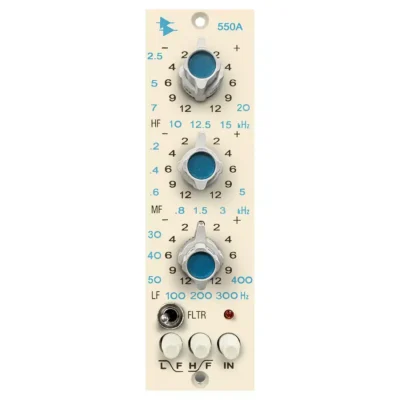
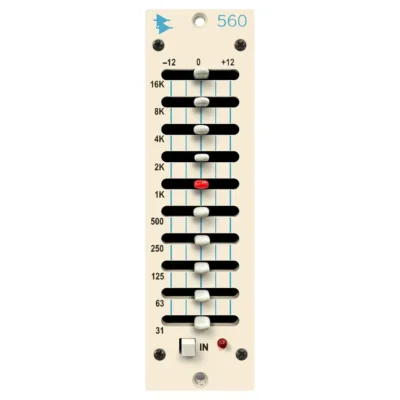
At Cyberfarm we carry the best equalisers from the best brands in the world and we've collected a handful of the best equalisers here:
Chandler TG Microphone Cassette